Gasifier

Erin Rasmussen

For those interested in using coconut husk (not shell)
Unprocessed coconut hulls make lousy fuel.
Coconut hull fiber are generally know as coir.
http://en.wikipedia.org/wiki/Coir
It is a big business in India.
http://msme.gov.in/Chapter%206-Eng_200708.pdf
The fibers are processed into mats, carpet backing, potting material, and geotextiles (for erosion control).

Erin Rasmussen

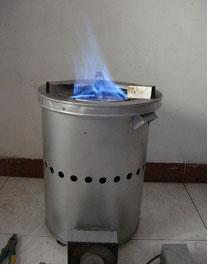
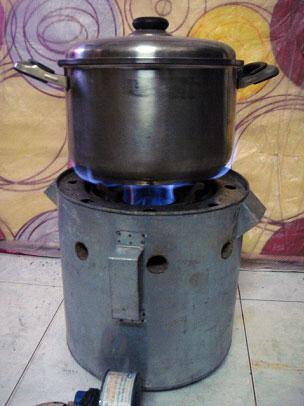
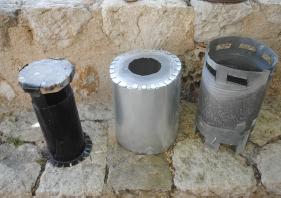
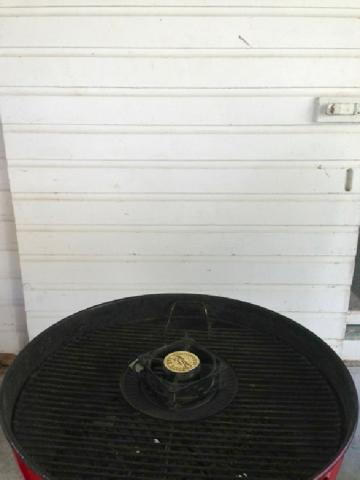
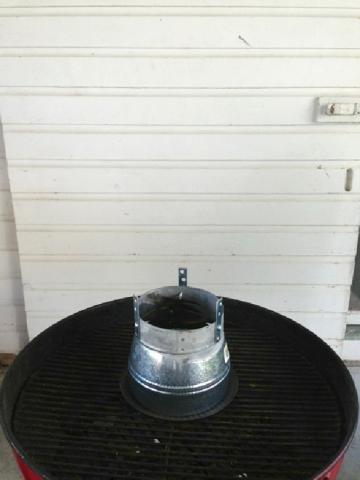
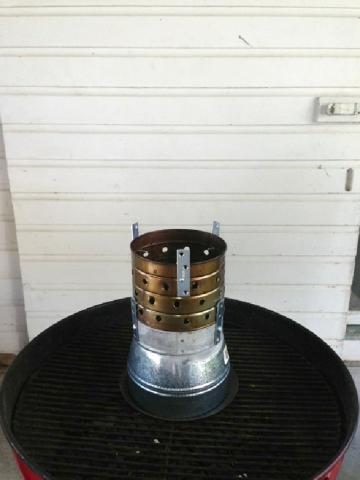
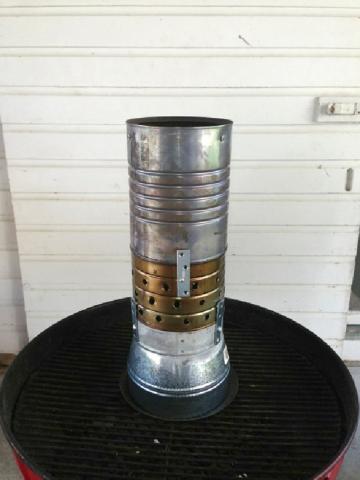
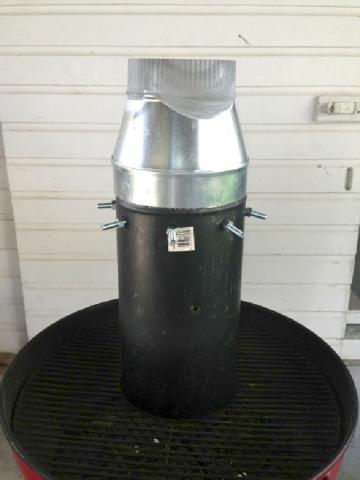
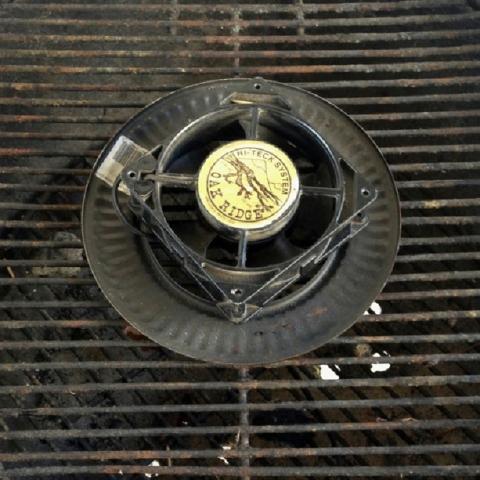
A few more pictures to clarify how the Rim Fire iCan is built. It is quite simple.

Materials:

Erin Rasmussen

Alexis Belonio, Victoriano Ocon, and Antionio Co

Garbage-In Fuel-Out (GIFO) Project,
Suki Trading Corporation, Lapu-Lapu City, Cebu, Philippines

This project is a cooperation between Suki Trading Corp. and Kanvar Enterprises and the Centre for Rice Husk Technoloy (CRHET).

Erin Rasmussen

Paal Wendelobo, October, 2011

The Peko Pe TLUD project in Zambia is going well.

Paal describes it best:

" The main principals for our projects I will call it community based participation both for fuel and for stove productions. Utilization of local resources with other words.. The Peko Pe is designed for production by local tinsmith with the tools they might have. They only need a template and a model; they have the knowledge how to make it.

" First of all we discuss the need of changes, and then on the fuel side we start up with registration of alternative biomass for fuel for briquetting, energy forestry for fuel production. We always start with the fuel .to be sure there is sufficient quantities and to an affordable price.

"The charcoal business, which represents about 15 % of the adult population, has to be involved from an early stage of the project. All kind of activities on the household energy sector will in one or another way have an influence of their business, and with biochar we don’t know what will happen, but that is one of the ting we will try to find out. Any how for the charcoal business it is just to change from charcoal to alternative biomass for household energy.

"The energy loss by production of biochar for soil improvement is almost equivalent to the energy needed for the farmer to cook if you include the African way of thinking time is coming not like by us time is running That is a big difference. A household need about 2,7 kg charcoal a day for cooking. Form about 10 kg of dry wood you will get 2,7 kg of charcoal for one day cooking and no biochar. From .10 kg of dry wood you will get 10 kg of woodchips and that will be for 2 ½ day of cooking into a TLUD-ND. and about 2.7 kg of biochar. The pilot project will tell us if this is right or wrong."

" A common Miombo forest in Africa will give about 3 ton wood per ha a year. 3 ton of dry wood will give 800 kg of charcoal. A household of 5 consume 2-3 kg charcoal a day or about 800 kg a year. To produce 3 kg of charcoal you need 10-12 kg of dry fire wood in a common kiln. That will give one day cooking on a charcoal stove, and almost no biochar. 10-12kg dry chopped wood will give 3 days of cooking on a TLUD-ND or another FES and 2.5 kg of biochar
Energy forestry using just the sprouting every year can give up to 10 ton wood per ha a year, easy to cut to appropriate fuel for TLUD-ND’s or other types of FES. By adding some biochar to soil of bad quality 20-30 % increased yields can be obtained, which will give more food, more household energy, more jobs, better economy, better health for women and children and saving the forest. It can probably be as simple as this and is that not some of what we are looking for and need?
We know some changes have to take place on the household energy sector and we have to start somewhere. Why not start with small scale farmers on sandy soil, and from there develop the new household bio-energy strategy for developing countries. Probably also with the charcoal business, they have the whole infrastructure intact and can easy change from charcoal to alternative biomass like chopped wood or pellets from agriculture and forestry related waste. "

Erin Rasmussen

Quoting "Prof. S.C. Bhattacharya" :

Dear all,

I would be happy to share some publications arising from the following
activities at the Asian Institute of Technology:
1. Sida funded Regional project: An information package (including
construction details) on biomass briquetting machines developed in a
number of Asian countries and design of natural- cross-draft gasifier stoves that can operate continuously is available. The briquetting machines developed
were improvements on standard screw-press heated die design. Cross-flow
gasifier stoves were designed for different sizes; these do not need any
blower and can operate continuously without any smoke.

The briquetting and gasifier stove work I mentioned was carried out under a
Sida-sponsored project at the Asian Institute of Technology (AIT). The
project involved researchers from 12 national research institutes of six
Asian countries, e.g., Bangladesh, Cambodia, Lao PDR, Nepal, Philippines and
Vietnam. The findings of the project were disseminated through national
dissemination seminars in these countries; published "Technology packages"
were distributed widely in the region and are still available for
downloading from the project website. We organized technology transfer
workshops, in which a number of NGOs form the region were invited, on most
of the technologies developed.

(There is no restriction on distribution of the technology packages.)

Unfortunately, the link of the project is not working due to heavy flood in
Thailand; AIT appears to be still under 2 m of water.

2. GTZ funded project on Biocoal: We used the term "Biocoal" (rather than
"Biochar") for charcoal produced from solid organic residues such as
agricultural residues and waste wood. The findings of the project were
reported in a book titled "Biocoal Technology and Economics" by "Regional
Energy Resources Information Center (RERIC)" (email:enreric@ait.ac.th).

The chapters of the 495-page book were:

  • 1. State of the art of biocoal technology,
  • 2. Biocoal technology: A comparison of options and recommendations,
  • 3. Carbonisation of sawdust briquettes,
  • 4. Laboratory-scale batch carbonisation selected residues,
  • 5. Cost and availability of selected residues in Thailand,
  • 6. Characterisation of selected residues,
  • 7.Biocoal: Market requirements and Opportunities in Thailand, and 8. Economics of biocoal production in Thailand.

A few copies of the book are still available with RERIC. A number of
chapters of the book were summarised as journal articles; I will be happy
to
share some of these with interested persons for their personal use and
research purpose.

Other technology packages and published papers of the Sida project can be downloaded from www.retsasia.ait.ac.th. The biomass/stove group may be interested the package on drying, which includes a hybrid drier using solar energy and bioenergy from a gasifier stove, heat output of which could be automatically controlled by using a thermostat.

I also coordinated another regional project (Asian Regional Research Programme in Energy, Environment and Climate, ARRPEEC) funded by Sida in three phases during 1995-2005. One of the 4 projects of ARRPEEC was on biomass. Dissemination booklets of ARRPEEC and some of the papers published can be downloaded from http://www.arrpeec.ait.ac.th
Erin Rasmussen

Mussie T. (Lecturer at Mekelle University, Ethiopia), October, 2011

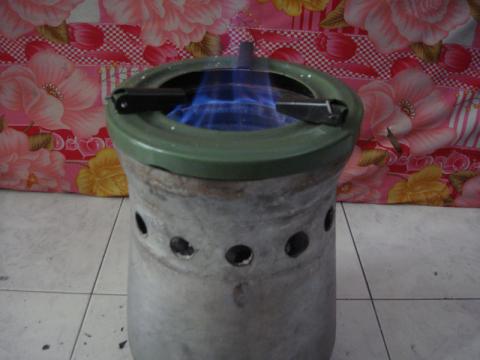
This is a Natural Draft Gasifier stove, that is designed with a central column of air that is designed to burn more common Ethopian fuels, e.g. coffee husk and saw-dust (cow dung binder) briquettes in addition to more conventional wood chips.

the air column is drilled on the surface so as to let additional primary air radially into the fuel at different stages to compensate for air clotting that can occur when run with small sized fuel as you go up from along fuel column. This helps the flaming pyrolysis from being air starved due to interlocking of fuel particles. In addition to that, closely spaced holes of relatively larger size were made near the top of the central air column to supply more hot post‐pyrolysis secondary air. The presence of two hot secondary air admission points is meant to supply enough air while keeping the stove short with reduced heat loss.

Once the stove has enough fuel, it is typically started with wood chips, or an accelerant to help the briquettes light, and then in all of the trials it burned without smoke until the fuel tank was filled with charcoal (typically between 60 and 90 minutes later). This is a biochar-producing stove, the stove does not efficiently combust it. Friability and the composition of the char depended upon the feedstocks.

For an excellent analysis of the stove, and pictures of the biochar, please see the included Report: Results from Preliminary Experiments Conducted on Multi‐level
Primary Air Entry Gasifier Stove

Erin Rasmussen

Andrew C. Parker, October 2011

Lion Cub Stove
A variation on Larry Winiarski's 16 Brick Stove
and Crispin Pemberton-Pigott's Lion Stove

"I had been waiting all Summer to use my brother's StoveTek
stove to do some experiments. While searching a reference

Erin Rasmussen

Christa Roth, February, 2011

Dear all, find below the links to new publications by GIZ HERA poverty-oriented basic energy services, among them the manual on Micro-gasification: Cooking with gas from biomass. For queries please refer to the respective authors or Michael Blunck from HERA.

the HERA web site

Micro-gasification: Cooking with gas from biomass

- new link : http://www.giz.de/Themen/en/SID-5B39BEEE-D808E629/dokumente/giz2011-en-micro-gasification.pdf

Micro-gasifiers: much more than „just another improved cook stove”. In this new HERA handbook, Christa Roth provides an introduction to the concept and the application of wood-gas burning technologies for cooking.

Modern Energy Services for Modern Agriculture. A Review for Smallholder Farming in Developing Countries.
http://www.gtz.de/de/dokumente/giz2011-en-energy-services-for-modern-agr...
This publication provides an overview on energy inputs required in different steps of the agricultural production chain, such as production, post-harvest and storage, processing, and commercialization.

Small-scale Electricity Generation from Biomass – Part III: Vegetable Oil
http://www.gtz.de/de/dokumente/giz2011-en-small-scale-electricity-genera...
In the third and final part of HERA’s paper series on power generation from biomass, GIZ and non-GIZ experience with electricity production from vegetable oils is compiled. While from a technology point-of-view, plant oils constitute a very viable option for off-grid power generation in developing countries, their sustainable application in daily operation for rural electrification projects still remains rare. The paper identifies remaining bottlenecks and provides recommendations for future electrification projects based on plant oil.

Carbon Markets for Improved Cooking Stoves – Revised Edition: January 2011
http://www.gtz.de/de/dokumente/giz2011-en-carbon-markets-for-improved-st...
After receiving a lot of positive feedback for the 2010 edition of the carbon market guidebook for cooking stove projects, HERA has come up with a major revision for 2011. Besides a large number of minor corrections and updates, a new chapter on “Implementing a Carbon-funded Cooking Stove Project” with information on how to practically design a carbon-funded stove project has been added. The chapter includes information on stakeholders’ roles and responsibilities, the CDM-PoA approach, recommendations on the use of carbon revenues as well as an overview on expected costs and revenues from a stove project on the carbon market.

Erin Rasmussen

Tom Miles, ETHOS Conference 2011
Kirkland, Washington, USA January 28th ~ 30th, 2011

The ETHOS Stoves Conference was last weekend, and it included demonstrations by some of the stove makers and manufactures, with the opportunity to talk to the people using and inventing the stoves.

Here are some of the stand-outs from the demonstrations area, click on an image to view it in a larger size.

The Shark Stove presented by John and Flip Anderson. Notice the even cooking on the pancakes, that even heat is partially due the ceramic shark teeth construction just under the cooking surface. This is primarily a stick burning stove with both a plancha (even cooking surface) and pot rests.

Jatropha Seed TLUD (Top, lit, updraft design, using natural draft - no fan) by
Pamoja (http://www.pamoja.net/protree_jatropha.html) and Jet City Stoveworks ( http://jetcitystoveworks.com/ ). Abely demonstrated by David Otto.

Paul Anderson dexterously burning Jatropha seeds (out of doors) in the Woodgas Stove ( http://woodgas.com/bookSTOVE.htm ) designed by Tom Reed. This is a light weight gasifying stove (minus the pot rest in the picture) that uses a small electric fan.
Boiling water in the Charbelle, presented by Peter Scott. The Charbelle is a Charcoal cooking stove designed by the Burn Design Lab ( http://www.burndesignlab.org/our-stoves/ ) for use in Haiti.

This stove features an abrasion and thermal shock resistant ceramic liner surrounded by sheet metal cladding. The stove is currently being mass produced and sold in Kenya. The stove has been very well received, earning top marks from consumers.


Ryan with StoveTec was demonstrating the StoveTec Stove ( http://www.stovetec.net/us/ ) an Ashden Award winning cook stove that can either be used with stick wood or charcoal.

The institutional version of the StoveTec Stove for use in schools and other organizations, has an attached chimney and an a pressure cooker version. The pressure cooker is useful to shorten cooking times, and the fuel consumption, when cooking beans and small grains.

The Nomad PrePac ( http://www.preppac.net/ ) Bio-fuel Camp Stove burning stick wood. This is an ultra-light stove designed to burn small amounts of fuel for camping or for emergency preparedness.

the PEMS emissions testing was happening at ETHOS (of course), Larry Winiarski is in the background in these pictures.
Erin Rasmussen

Art Donnelly, December, 2010

Mas que Cafe (on YouTube)

(Produced, shot and edited by Majo Calderon & Carlos Herrera
http://www.biodieseldiaries.com )

Pages

Subscribe to Gasifier