South Africa

Erin Rasmussen

A Geyser, is a hot water heater in South Africa. There are many areas there that are not connected to conventional utility grids, and heating water with electricity and natural gas is expansive and/or impractical.

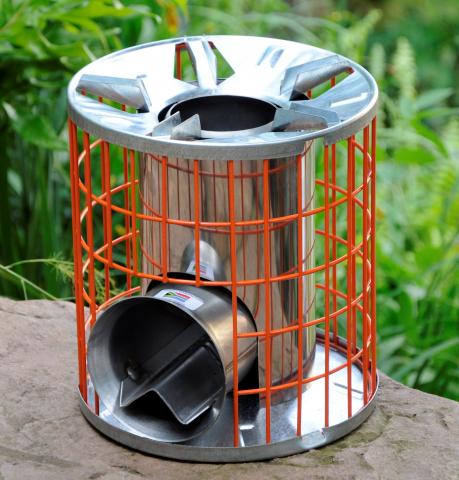
Tankless, batch hot water heaters directly connected to the shower etc, are a great single-use application for an efficient stoves.

Erin Rasmussen

Crispin Pemberton-Pigott, December, 2011

The Sustainable energy Technology and Research (SeTAR) Centre is a multi-disciplinary research facility that operates under the aegis of the Faculty of Science at the University of Johannesburg. The SeTAR Centre was formally launched in March 2010. The centre is housed in a cottage within the University of Johannesburg Research Village on the Bunting Road Campus, with dedicated office space and a testing laboratory in the basement of the Faculty of Art, Design and Architecture (FADA) building.

The SeTAR Centre is engaged on research programmes that focus on energy poverty in both rural and urban areas of South Africa; the role that energy has to play in climate protection in the sustainability of a megacity (Gauteng); the public understanding of science; and networking on energy issues in the Africa region. The SeTAR Centre provides research facilities for energy studies for masters and doctoral students through its affiliation with the Department of Geography, Environmental Management and Energy Studies (GEMES) in the Faculty of Science.

One of the Research Programs is the Basic Energy Programme

The programme focuses on energy poverty and acts as an innovation hub for the development of basic energy solutions for cooking, heating, lighting and productive use for the low income communities. Services and research streams include:

Testing Laboratory
: SeTAR centre has a fully equipped basic energy testing laboratory for use as part of research activities or on a fee-for-service basis. The centre has advanced equipment and automated systems to ensure all tests are carried out satisfactorily and competently. The SeTAR centre was commissioned to characterize thermal efficiency and gaseous emissions of a variety of fuel/stove combinations. In the process of evaluating these stoves, the research staff have also been engaged in the development of written procedures, leading to the Heterogeneous stove Testing Protocol (HTP).

Energy Poverty Research: Focusing on energy access, socio-economics and user needs and aspirations. This assists in designing sector-specific intervention.

Energy Design Innovation: Involved with the design and innovation of safe, clean and affordable basic energy technologies.

Networking and Information: Coordinating a regional (Africa) university-based People’s Energy Network (PEN) and also developing a South African network and industry association.

Attached is the 2011 Annual Report,

teddy

The Cookswell Energy Saving Cookstove (Jiko) Company

Erin Rasmussen

Crispin Pemberton-Pigott April, 2011

International, DUE (Domestic Use of Energy) Conference
12 - 13 April 2011

Cape Peninsula University of Technology
Cape Town Campus, South Africa

See attached Brochure:

A sample of the conference presentations

Design Features of Solid Fuel Stoves: Workshop Discussion
Mr Crispin Pemberton-Pigott, New Dawn Engineering, Ontario

The Uncontrolled Cooking Test: Measuring Three-Stone Fire Performance in Northern Mozambique
Mr James Robinson, University of Johannesburg, Auckland Park,

A Preliminary Comparison between the Heterogeneous Protocols and the Water Boiling Test
Mr Tafadzwa Makonese, University of Johannesburg, Auckland Park,

Tom Miles

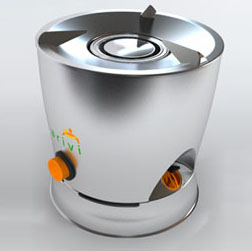
BP Arivi Paraffin Stove

February 2009

BP Arivi Paraffin StoveBP Arivi Paraffin Stove
BP Arivi

BP has taken a life-cycle approach, starting with the consumer need, through to regulatory and HSE assessment in the case of BP Arivi. BP Arivi is a low-sulphur paraffin fuel for domestic cooking, providing consumers with access to an affordable, high-value fuel, in safe and child-resistant packaging. Different options were considered to determine the most appropriate fuel to meet the needs of consumers and scrutiny of the supply chain was undertaken to identify key risks We are now commercially piloting this solution in the market in South Africa and there will be further iterations around the process. (Website www.myarivi.com)

Other BP Arivi Links

Designer - Terrestrial ( www.trstrl.com ) Arivi Stove

Hello stoves community,

At ETHOS 2009 we held a panel on stove safety, bringing in viewpoints from corporate standards development, national standards certification, and small to medium scale developers. The team led by Nathan Johnson (Iowa State University) included Crispin Pemberton-Pigott (New Dawn Engineering), Casper Thijssen (Philips), and Karabi Dutta.

The panel gave a comparative analysis of how different stove industries (multinational corporations, medium-scale companies, NGOs, small developers, etc.) addressed fundamental stove safety questions. These topics included:

a) applicability of standards and regulation;
b) incentives and benefits
c) facilities and equipment availability
d) cost vs. benefit
e) resulting action

We determined that each type of industry has a different perspective that influences their path or actions towards a safer stove. And that all sub-industries may not produce safer stoves given the same incentive mechanisms or policies. As such more than one path to safety may be needed to reach the greatest amount of end-users (and producers). The panel ended the discussion with an overview present work in stove safety with recommendations for next steps.

Please view the attached file for more details. I will be leading a group in 2009 to work on the following: assemble database of injury data, b) analyze incentive mechanisms, cost/ benefit, c) development of lab testing procedures for different stove categories, d) publication of findings/ results, and e) look for partnerships with international agencies to support safer stove design and production.

Please contact me if you have any questions. There will be more updates to follow. Best,
Nathan Johnson
atlas@iastate.edu
PhD Candidate, Mechanical Engineering, International Development
Iowa State University

Tom Miles

Vitagoat Steam Boiler
Malnutrition Matters, Ottawa, Canada

Steam boiler: Operates on wood or other solid fuels or liquid gas. Steam-injected pressure -cooking can be 10 times more fuel efficient than traditional open fire cooking and more efficient than improved stove-design cooking. Water is heated in an inner chamber and the resulting steam is re-heated in a tube, creating a “superheated steam” that is much hotter than regular steam. The steam is then fed into the cooker. The boiler is inexpensive to build, safe, and can be taken apart for cleaning, which is critical since most boilers accumulate scale on their inner shells and eventually fail.

Tom Miles

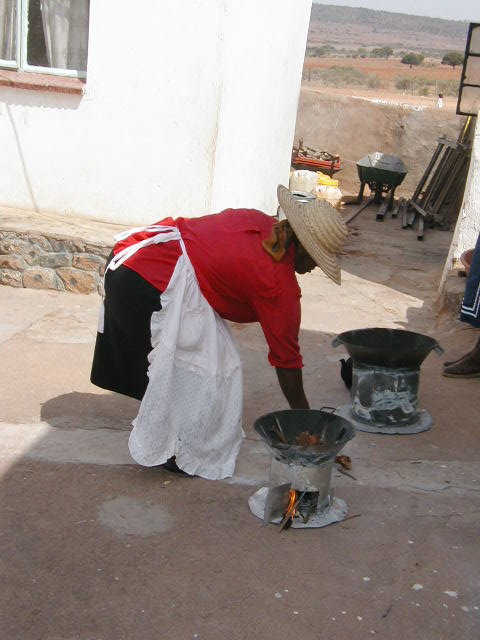
Mali (Sewa) Stove Used in Polekwane, Limpopo Testing
Crispin Pemberton-Pigott and Rina King, New Dawn Engineering, December 2002


Rina King: A picture of the "Mali Stove" and "Modified Mali Stove" are attached. "They"

Tom Miles

Prototype Briquette gasifying stove

Richard Stanley and Kobus Venter October 2003

Pages

Subscribe to South Africa